

Ask the Nurse: AL amyloidosis
AL amyloidosis is a relatively rare condition, which few people have heard of before they, or a friend or family member, receive a diagnosis. This can often leave people feeling anxious about what to expect and uncertain about the future.
In the UK, around 500–600 people are diagnosed with AL amyloidosis each year. Typically, most people diagnosed are in their 60s but it can affect younger people too. It is slightly more common in men than women. In this month’s blog, ahead of World Amyloidosis Day on 26 October 2024, we answer some of the questions you ask us about AL amyloidosis.
What is AL amyloidosis?
The term ‘amyloidosis’ describes a group of conditions where an abnormal protein, called amyloid, builds up in the tissues of the body. This buildup of amyloid protein is called an ‘amyloid deposit’.
There are different types of amyloidosis which are named according to the type of amyloid protein that is produced. The proteins produced in AL amyloidosis are called ‘light chains’.
Light chains are proteins which normally make up a part of healthy antibodies, produced by healthy plasma cells. Antibodies are an important part of the immune system, they are produced in response to foreign substances such as viruses and bacteria. Figure 1 shows the structure of an antibody, with two heavy chains shown in grey and two light chains shown in orange.
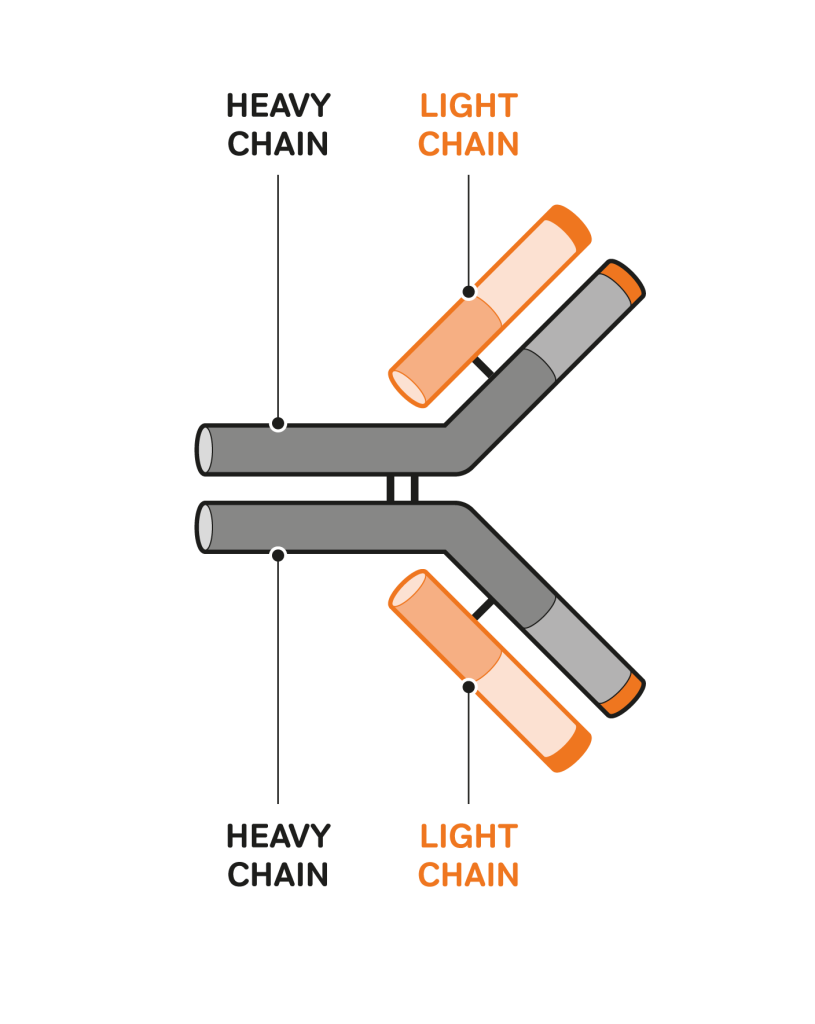
Figure 1
However, in AL amyloidosis, abnormal plasma cells in the bone marrow produce an excess of one type of abnormal light chain that forms amyloid proteins, resulting in amyloid deposits.
Amyloid deposits can occur in different organs or tissues. When they build up in the kidneys, heart, liver, spleen, nerves or digestive system they can cause problems and prevent the organs from working properly. AL amyloidosis does not affect the brain.
If you or a loved one have recently had a diagnosis of AL amyloidosis, or are living with the condition, you can find out more in our Myeloma UK Information Hub.
What are the symptoms of AL amyloidosis?
Because AL amyloidosis can affect different organs in the body, symptoms can vary from person to person. Most patients will have more than one organ affected, and the most affected organ is called the ‘dominant organ’.
Symptoms will depend on which organs are most affected by the amyloid deposits. It is normal for people living with AL amyloidosis to experience very individual patterns of symptoms.
The most common symptoms of AL amyloidosis include:
- Fatigue and weakness. For more information see our Fatigue Infosheet
- Weight loss and loss of appetite. For more information see our Diet and nutrition Infosheet
- Swollen legs and abdomen (the fluid buildup can also cause rapid weight gain)
- Shortness of breath
- Dizziness
- Tingling, numbness or pain in the hands, feet and lower legs. For more information see our Peripheral neuropathy Infosheet
- Nausea, diarrhoea or constipation. For more information see our Diarrhoea Infosheet and Constipation Infosheet
- Bruising of the skin (especially around the eyes) or unexplained bleeding (for example nosebleeds, easy bruising without injury, or bleeding gums)
- Swollen tongue
Not everyone will experience all of these symptoms. Your symptoms will depend on where in your body the amyloid is being deposited. If you are worried or unsure about new or changing symptoms, do speak to your healthcare team.
How is AL amyloidosis diagnosed?
Several tests and investigations are needed to diagnose AL amyloidosis. If possible, these are carried out at the specialist National Amyloidosis Centre (NAC) in London. If necessary, they can provide local accommodation and, dependent on medical need, transport may be provided for some patients.
Some of the tests you may have include:
- Tissue biopsies
- Healthy blood cell counts
- Bone marrow tests (a sample of bone marrow taken via a bone marrow biopsy)
- Kidney function tests
- Serum free light chain assay (a blood test or sometimes urine sample)
- The SAP scan (a scan that looks for amyloid deposits)
You can read more about these tests in our AL amyloidosis: Your Essential Guide Infoguide. Some tests will be repeated after diagnosis to monitor the AL amyloidosis and how it responds to treatment.
How is AL amyloidosis managed?
Although AL amyloidosis is currently incurable, there are treatments that can be very effective at controlling the condition, reducing symptoms, improving the quality of life and ultimately extending life.
The outlook for patients has improved over recent years, including this year, with the approval of DaraCyBorD, the first treatment specifically for AL amyloidosis in the UK.
Treatment can reduce the number of abnormal plasma cells in the bone marrow, prevent further tissue or organ damage, control the AL amyloidosis if it has come back (known as relapse) and improve quality of life.
The treatments are similar to those used for myeloma and can include:
- High-dose therapy and stem cell transplantation (HDT-SCT)
- Monoclonal antibody drugs such as daratumumab (Darzalex®) and isatuximab (Sarclisa®)
- Chemotherapy such as cyclophosphamide and melphalan
- Steroids such as dexamethasone and prednisolone
- Immunomodulatory drugs such as thalidomide and lenalidomide (Revlimid®)
- Proteasome inhibitors such as bortezomib (Velcade®), carfilzomib (Kyprolis®) and ixazomib
You can find more information on these treatments in our Treatment Guides and High-dose therapy and stem cell transplantation Infoguide.
Can somebody have both AL amyloidosis and myeloma?
Both myeloma and AL amyloidosis are conditions which involve abnormal plasma cells, so the treatments can be very similar. However, whilst myeloma is a blood cancer, AL amyloidosis is not a cancer.
However, occasionally a patient may be diagnosed with both conditions. Sometimes both are diagnosed at the same time, or one may be diagnosed before the other.
If you notice a change in your symptoms or experience any new symptoms, make sure to tell your healthcare team. This will help you get the best treatment at the right time.
More information about myeloma can be found in our Myeloma – An Introduction Infoguide.
How do I cope with the complications and side effects of AL amyloidosis?
AL amyloidosis and its treatment can cause different symptoms and side effects in different people. These can have physical and psychological effects and living with them day to day might be frustrating and tiring.
There are supportive care treatments that may be available to help with different symptoms, as well as things that you can do to help yourself feel better.
Making sure you maintain a healthy lifestyle can help you to live well with AL amyloidosis and manage some common symptom and side effects, such as fatigue, more easily. Eating a balanced diet, maintaining a good sleep routine, getting regular gentle exercise and allowing yourself to rest can be ways to support yourself day-to-day.
However, your healthcare team are there to support you in managing your symptoms and side effects. They can give advice tailored to your specific circumstances.
Our Information Specialists can also offer support – get in touch on 0800 980 3332 (UK) or 1800 937 773 (Ireland), available Monday-Friday, 9am-5pm (closed weekends and some public holidays) or use our Ask the Nurse email service.
How can I live well with AL amyloidosis?
Being diagnosed with AL amyloidosis affects everyone differently. Whilst it can feel overwhelming, especially to begin with, there is no right or wrong way to feel. However you are feeling, acknowledging your emotions and taking time to learn how to cope with them can be helpful.
Living well with AL amyloidosis is possible. Alongside managing the side effects and complications of AL amyloidosis and its treatment, it is important to make time for things you enjoy. Having a positive focus or activity can offer a sense of achievement and support your sense of self.
Support is available when you need it. Talking to your family and friends can be helpful and they might find it useful to understand your experiences better. Your healthcare team and Myeloma UK can also offer support.
There are a number of support groups for AL amyloidosis patients and their families in different parts of the UK and virtually, as well as our Peer Buddy Service for one-to-one support. More information can be found in our AL amyloidosis: Your Essential Guide Infoguide.
It may be necessary to do a little extra planning, but it is often still possible to enjoy holidays and travelling abroad with AL amyloidosis too. Read more in our Travelling and travel insurance Infosheet.
If you have any further questions or need support, contact us through the Myeloma UK Infoline at 0800 980 3332 (UK) or 1800 937 773 (Ireland) or use our Ask the Nurse email service.



Browse library content

Stay in touch
We’d love to stay in touch. Join our mailing list to receive updates from Myeloma UK including our monthly newsletter and updates about our services, research, campaigns and other ways you can get involved.


